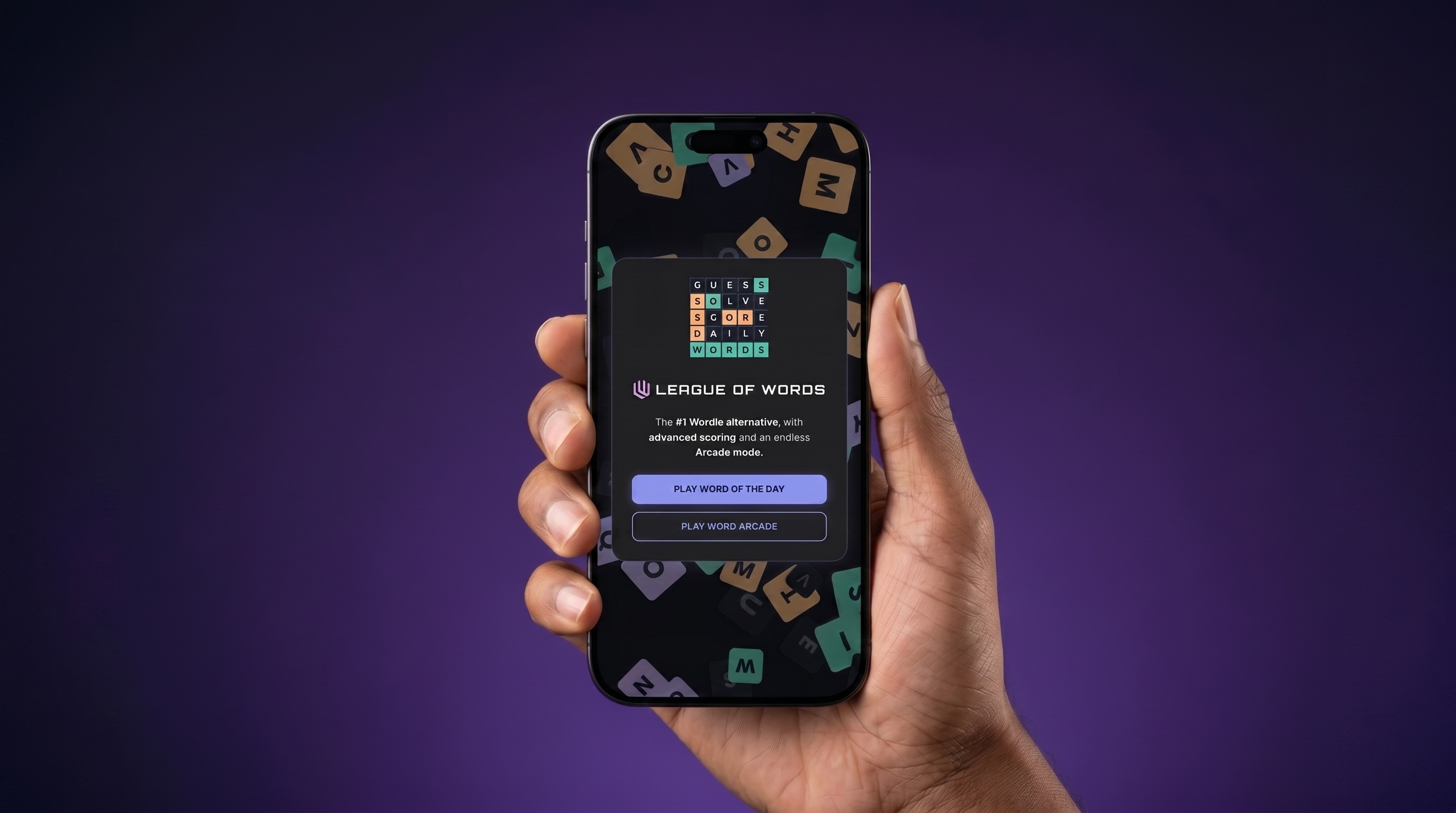
Wordle is a well-designed game. Six guesses, one word, color-coded feedback. The loop is tight, the rules are simple, and for a few months in early 2022 it was the thing everyone was talking about.
Then it wasn't.
I kept asking myself what happened, because the game didn't get worse. The word of the day still showed up every morning. The mechanic still worked. Something else broke.
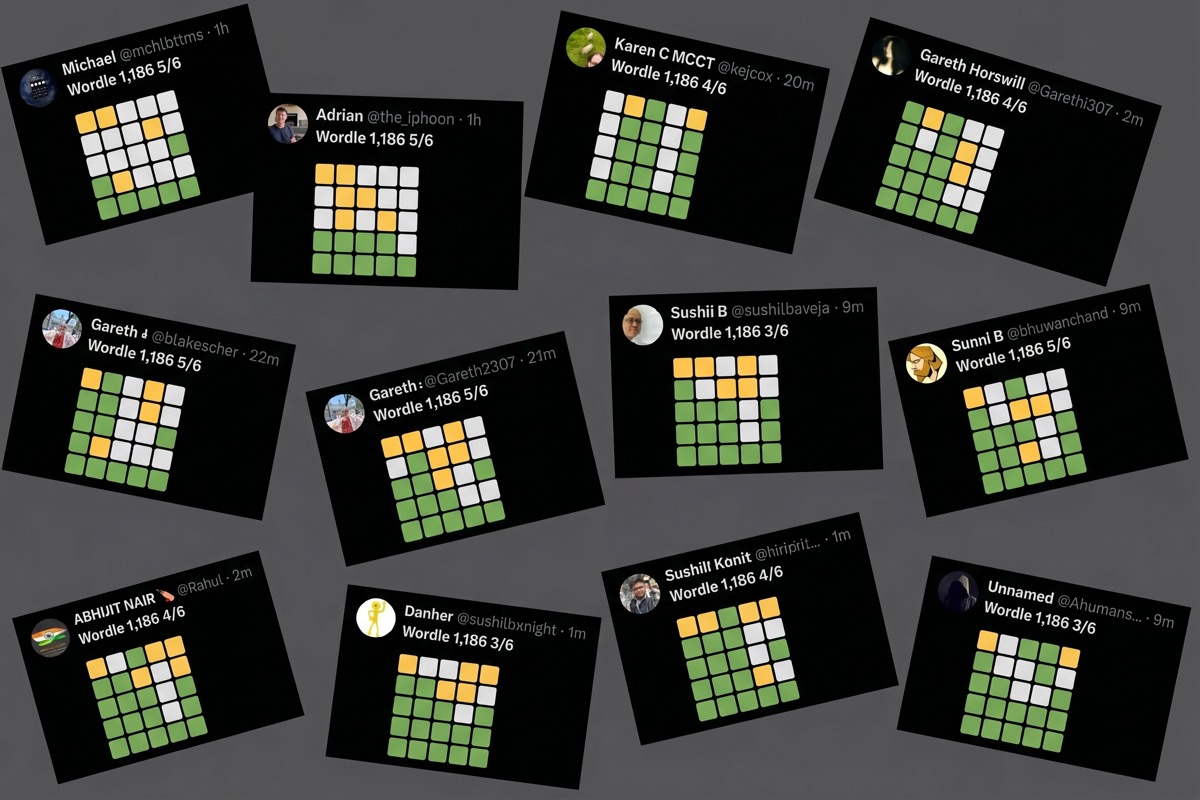
The share grid got old fast
The thing that made Wordle viral also killed it.
That little grid of green and yellow squares you'd post on Twitter or drop into a group chat was clever. It told the story of your solve without spoiling the word, and for a while, seeing those grids in your feed felt like a shared ritual.
Then it became noise.
I remember sending my result into a group chat and watching it get ignored. My friends weren't playing. They'd never started. The grid meant nothing to them, and from their perspective I was cluttering a thread they used to make dinner plans.
The same social behavior that spread Wordle eventually confined it. It survived longest in family group chats, where parents, aunts, and cousins had all agreed to play together. But even there, as people drifted away, the shares became one-sided. You're announcing a game to people who've already moved on.
Six outcomes isn't enough
Something only becomes obvious after you've played for a while: there are only six things you can share.
Solved in 1. Solved in 2. Solved in 3. Solved in 4. Solved in 5. Solved in 6.
Most people solve in 4, sometimes 5, which means most of what gets shared is unremarkable. A 4/6 grid doesn't tell a story. It says: I played, I finished.
The share grid had no range. A lucky 2-guess solve looks dramatic, but it's mostly luck. A grinding 6-guess save is tense to play but looks identical to a comfortable 6 from the outside. There was nothing to brag about, and without that, the social layer collapsed.
No score, no progression
The other thing missing: Wordle didn't track anything meaningful.
No stats early on. No streak until they patched it in later. And even then, a streak only tells you that you haven't failed recently. It measures consistency, not skill. You could solve every puzzle in 5 guesses for 200 days straight and your streak would look identical to someone who solves in 2.
There was no answer to the question competitive players actually want answered: how good am I?
That matters more than it sounds. Tracking progress is what turns a casual habit into something you care about. Without it there's no feedback loop, just a daily puzzle that resets to zero whether you played brilliantly or barely scraped through.
Most alternatives missed the point
When Wordle peaked, alternatives multiplied fast. Some changed the grid: Quordle gave you four words at once, Octordle gave you eight. Some changed the subject: Heardle used music, Framed used movie stills, Globle used world geography. Wordle but harder. Wordle but themed.
Most of them changed the format. None of them changed the feeling.
Quordle is impressive the first time you play it. Juggling four boards at once is hard. But it's still a one-and-done daily puzzle with no score and no progression. You finish, feel briefly clever, and have nothing to show for it. The stakes are the same as Wordle: zero.
The problem was never the five letters. It was that there was nothing to play for.
What I built instead
I wanted a word game where the point wasn't finishing, it was finishing well.
League of Words keeps the format Wordle players already know: five-letter words, green and yellow tiles, six rows. But every solve earns a score. Guess it in two rows and you walk away with 500 base points before bonuses. Grind it out on row six and you feel every point you didn't earn.
Time matters. Unused rows matter. Playing on Hard Mode, where every revealed letter must appear in your next guess, earns a bonus on top. There's also an Arcade mode where you chain words across levels and stack score as you go, with leaderboards worth caring about.
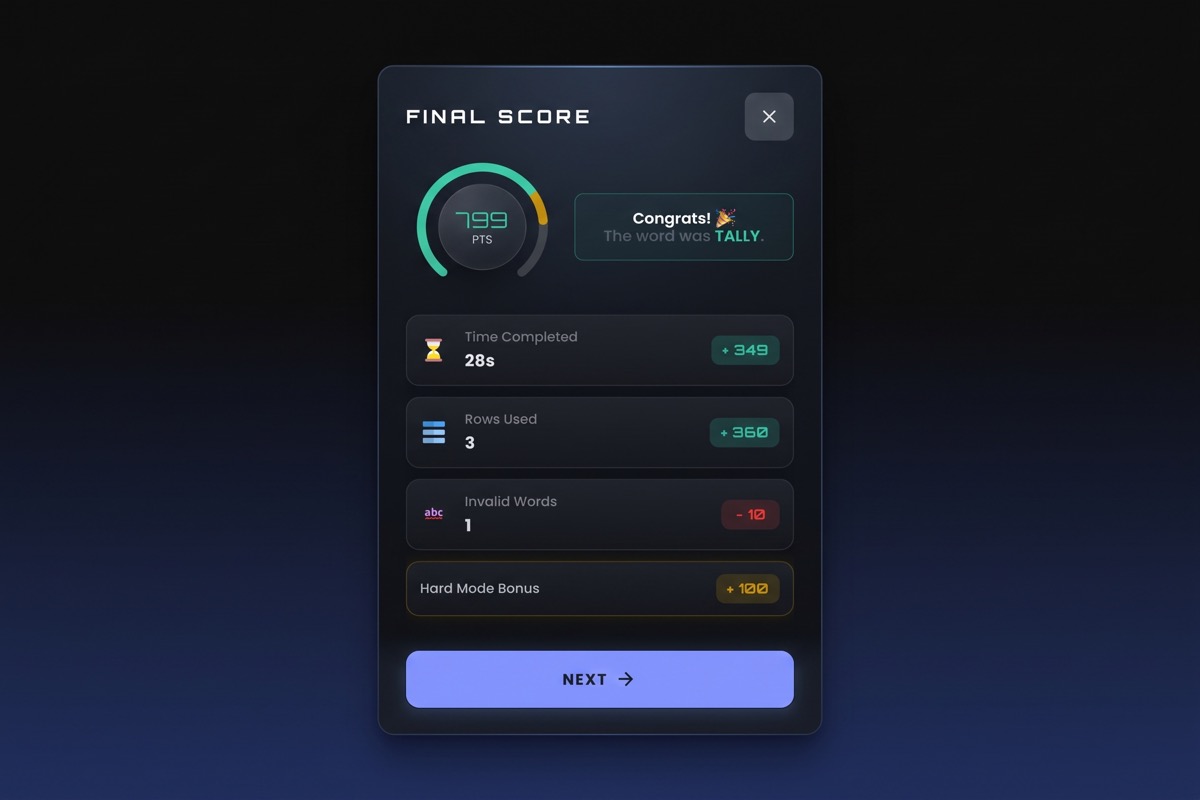
The share is still there, but now it comes with a number attached, and the number means something. Two people can both solve in four guesses and walk away with completely different scores depending on how fast they played and how much they left on the table.
That's what was missing. Not a different mechanic, just stakes.